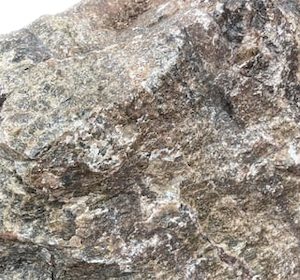
Zinc
- Color:
- Zinc ore is typically brown, yellow, or black in color, although it can also be red, green, or colorless.
- Luster:
- It has a resinous to adamantine luster when freshly broken, but may become dull upon exposure to air.
- Hardness:
- Zinc ore has a hardness of 3.5 to 4 on the Mohs scale, which means it is relatively soft and can be scratched with a knife or a fingernail.
- Density:
- The density of zinc ore varies depending on its composition and impurities, but typically ranges from 3.9 to 4.2 g/cm³.
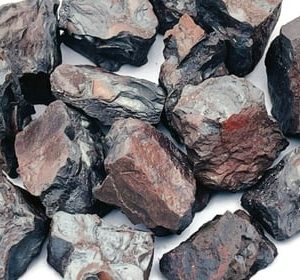
Iron
- Color:
- These rocks and minerals vary in color, ranging from rusty red and deep purple to striking yellow and dark gray.
- Luster:
- Pure iron is a soft, lustrous, dark silvery-gray metal. Iron is a strongly reactive metal — highly reactive with acids — and forms oxides, commonly known as rust, on contact with air and water.
- Hardness:
- The hardness is variable, but generally falls in the 4–5.5 range on the Mohs scale.
- Density:
- Iron ore fines contain hematite, goethite and magnetite with varying iron content, and have a bulk density ranging from 1,500 to 3,500 kg/m³.
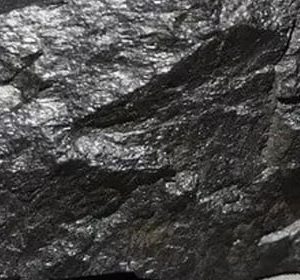
Tantalum
- Color:
- Tantalite is black to brown in both color and streak. Manganese-rich tantalites can be brown and translucent.
- Luster:
- Typically found in the ore columbite-tantalite (usually referred to as coltan).
- Hardness:
- It has a Mohs hardness of 7 and a high specific gravity of 8.45.
- Density:
- In the periodic table, tantalum is located in the same group as tungsten. With a density of 16.65 g/cm³, tantalum has a similarly high density to tungsten.
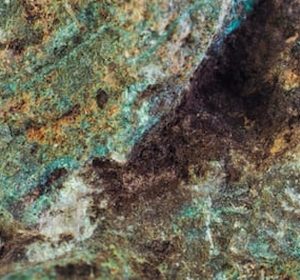
Copper
- Color:
- Known as horseflesh ore by some miners, because of its fleshy pink color on fresh unoxidized surfaces. These surfaces quickly oxidize to multicolored iridescent colors — this leads to the name of peacock copper ore.
- Luster:
- Copper is a reddish, relatively abundant, easily-worked metal with a bright metallic luster.
- Hardness:
- It has a hardness of 3 on the Mohs scale.
- Density:
- Bulk density: 2.8 to 4.0 kg/m³.
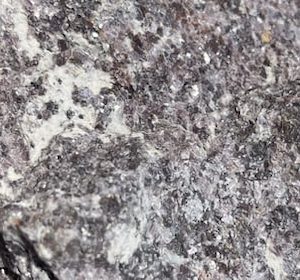
Lithium
- Color:
- Lithium ore minerals can have various colors, ranging from colorless to white, gray, pink, yellow, or even green.
- Hardness:
- Primary lithium-bearing minerals have a Mohs hardness of 6.5 to 7, making them relatively hard.
- Density:
- The density of lithium ore minerals also varies depending on the specific mineral species.
- Crystal Structure:
- Lithium ore minerals can have different crystal structures. Spodumene typically crystallizes in the monoclinic system and forms prismatic crystals, while lepidolite crystallizes in the hexagonal system.
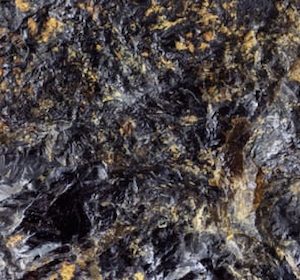
Cassiterite
- Color:
- Shining black to brownish-black, with strong resistance to weathering.
- Luster:
- Adamantine to submetallic, splendent; may appear greasy on fractures.
- Hardness:
- Cassiterite has a high specific gravity (6.8 to 7.1) and a hardness of 6 to 7.
- Density:
- Tin ore has a relatively high density, ranging from 6.4 to 7.1 g/cm³.
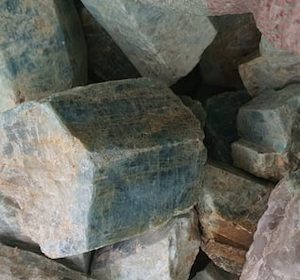
Beryllium
- Color:
- Colorless to pale yellow (bertrandite); green, blue, yellow, colorless, pink and others (beryl).
- Luster:
- Vitreous, pearly (bertrandite); vitreous, resinous (beryl).
- Hardness:
- 6 – 7 (bertrandite), 7.5–8 (beryl).
- Crystal System:
- Orthorhombic (bertrandite), Hexagonal (beryl).
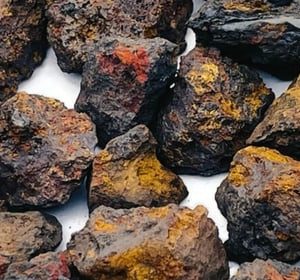
Manganese
- Color:
- Dark, black to light gray, sometimes bluish. The most important of these minerals is pyrolusite, the main ore mineral for manganese. Manganese is essential to iron and steel production.
- Luster:
- Metallic, dull, earthy.
- Hardness:
- Primary manganese minerals have a Mohs hardness of 2 to 6.5, making them relatively hard.
- Density:
- Manganese is a brittle metal, with a density of 7.2–7.46 g/cm³.
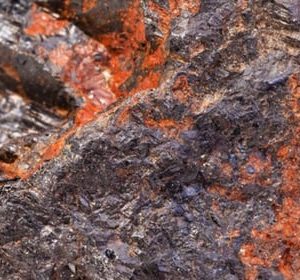
Wolframite
- Color:
- Colorless, white, gray, brown, pale yellow, yellow-orange, pale orange, red, or green (scheelite); grayish to brownish black (wolframite).
- Luster:
- Vitreous, adamantine (scheelite); submetallic, resinous (wolframite).
- Hardness:
- 4.5–5 (scheelite), 4–4.5 (wolframite).
- Crystal System:
- Tetragonal (scheelite), monoclinic (wolframite).